
The two main company types
Most foreign investors choose between two structures. The Limited Liability Company (Limited Şirket, LLC) is the popular choice for small and medium-sized businesses: it is simpler and cheaper to run, can be formed by a single shareholder, and the minimum share capital is TRY 50,000, which may be paid in full within twenty-four months of registration rather than upfront.
The Joint-Stock Company (Anonim Şirket, JSC) suits larger ventures, businesses that plan to take on outside investors, and companies that may one day go public. Its minimum capital is TRY 250,000, of which at least twenty-five per cent must be deposited in a Turkish bank account before registration. Certain regulated sectors — banking, insurance, and similar — must use the JSC form by law. For most foreign entrepreneurs starting a standard commercial operation, the LLC is the more practical entry point.
What you need to get started
The essential items are modest: passports of the founder or founders (often apostilled, with sworn Turkish translations), Turkish tax identification numbers, a registered business address in Turkey, the draft articles of association, and the founders' signature declarations. A company bank account is opened as part of the process for the capital.
The formation process, step by step
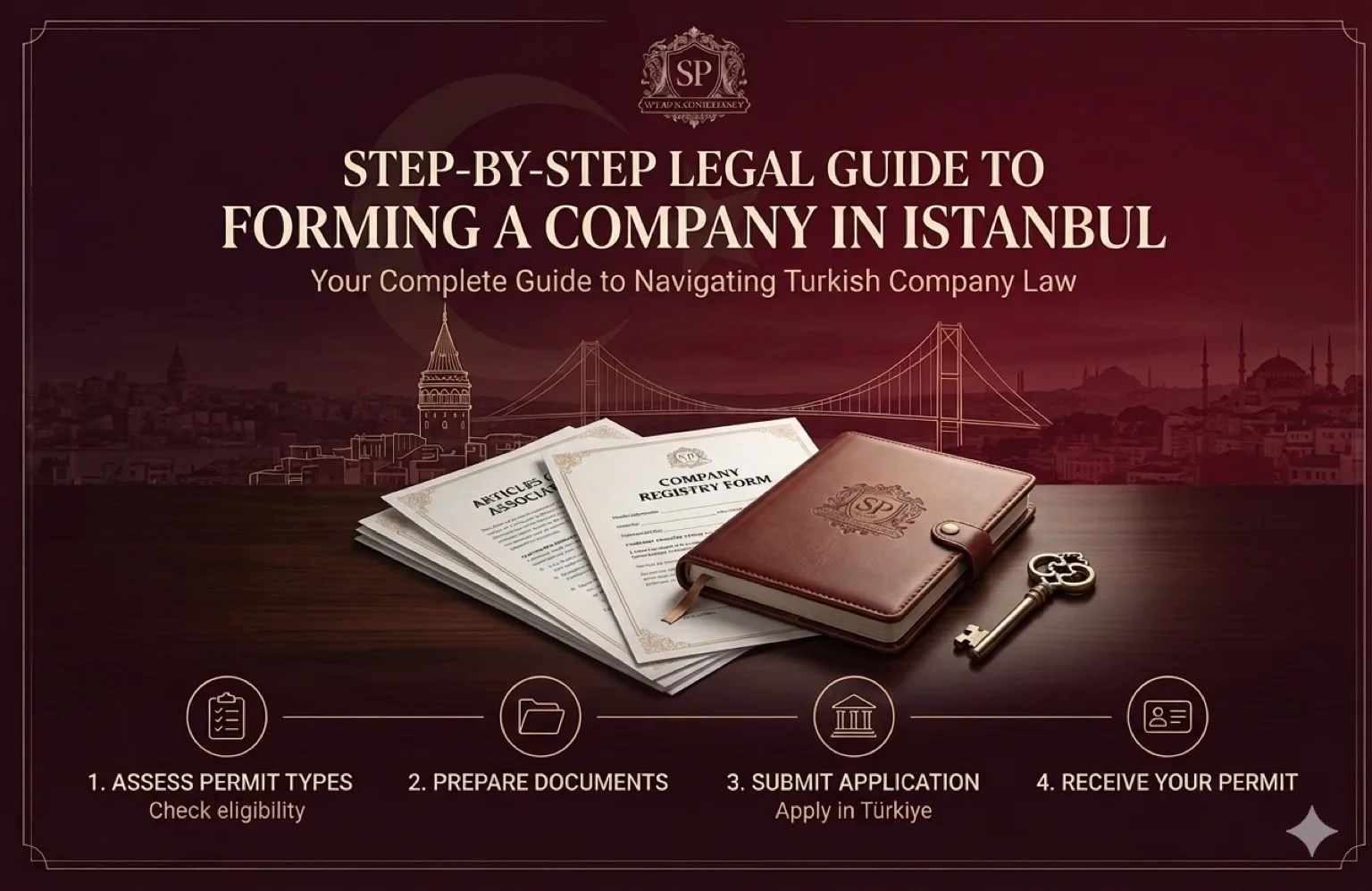
In outline, the steps are these. The articles of association are prepared and entered into the central MERSIS system. The company is then registered with the Istanbul Trade Registry Directorate (Ticaret Sicil Müdürlüğü), which publishes the incorporation in the Trade Registry Gazette. The company obtains its tax registration with the tax office and is enrolled with the Social Security Institution (SGK). Company books are kept and the signature circular is notarised. Once these steps are complete, the company legally exists and can begin trading.
Tax and ongoing obligations
The corporate income tax rate in Turkey is twenty-five per cent. Value added tax applies at a standard rate of twenty per cent, with reduced rates of one and ten per cent for certain goods and services. After formation, a company must keep proper accounting records, file periodic VAT and withholding-tax returns, and submit annual financial statements. Most companies retain a local accountant to manage these filings, which are routine but unforgiving of missed deadlines.
The legal detail that matters
The framework above is enough to plan with. The points that follow are where decisions carry real legal and financial weight.
Companies are governed by the Turkish Commercial Code No. 6102, and the right of foreigners to invest on equal terms with Turkish nationals is secured by the Foreign Direct Investment Law No. 4875 — which is why no local partner is required. A development that affects both new and existing companies is the increase in minimum capital that took effect in 2024: TRY 50,000 for LLCs and TRY 250,000 for JSCs. Companies incorporated under the older, lower thresholds are required to raise their capital to the new minimums, and founders restructuring an existing entity should confirm the current compliance deadline rather than assume their company is already compliant.
A practical obstacle specific to the JSC is the requirement to deposit twenty-five per cent of the capital before registration, because opening the bank account to do so usually requires a tax number, which in turn is tied to the formation process. This is resolved by obtaining a temporary tax identification number and using a capital-blocking account, but it needs to be sequenced correctly — another reason the LLC, which allows capital to be paid after the company exists, is simpler for most foreign founders.
Foreign directors should also be aware of personal liability for public debts. Under Turkish tax and social-security rules, if a company fails to pay its corporate tax, VAT, or SGK premiums and the state cannot recover them from the company, directors can become personally liable. Active compliance is therefore not optional, and the choice of who is appointed as director carries real consequences.
Points specific to foreign shareholders
Documents issued abroad generally need an apostille and a certified Turkish translation before they are accepted. Each foreign shareholder will need a Turkish tax number, and a foreign individual who intends to work in or manage the company in Turkey will usually need a work permit — which also serves as their residence permit for its duration — and this is a separate process from the company formation itself. Share transfers are possible after formation: in an LLC they require notarisation and registration with the Trade Registry, while in a JSC the process is generally more flexible.
Common pitfalls
The recurring problems are avoidable: articles of association that do not reflect how the business will actually operate, an incorrectly sequenced JSC capital deposit, underestimating the ongoing accounting and filing burden, and documents from abroad that are not translated to the certified standard the registry requires. Getting the structure and paperwork right at the outset is far cheaper than correcting it later.
A note on figures and timing
Capital thresholds, tax rates, and compliance deadlines change periodically; the 2024 capital increase is a recent example. The figures here reflect the position in early 2026 and should be confirmed before you act on them. This article is general information and does not constitute legal or tax advice on any individual matter.
Continue reading
Planning to start a business in Turkey?
We guide foreign investors through the whole process — choosing the right structure, drafting the articles of association, handling MERSIS registration, tax and SGK enrolment, and preparing every document and translation to the standard the authorities require. As both attorney and sworn translator, we manage the legal work and the certified English–Turkish documentation together, so nothing is lost between your plans and the Turkish registry.
Get in Touch